
The Optimizing Strength Ratios (OSR) Course is one of the most comprehensive tools for individualizing strength development based on limiting lifts. Traditionally structured over a four-day microcycle, OSR blends precision programming with intelligent fatigue management and motor pattern continuity. But what if life, scheduling conflicts, or recovery needs demand a shift to a three-day training week?
This article addresses exactly that and offers a solution that keeps the integrity of the OSR system intact while remaining highly effective.
Can the OSR Program Be Adapted to Three Days?
Yes, but it requires a smart structural tweak, not a complete redesign.
Rather than eliminating a training day or reorganizing session content, the most effective solution is to:
Float the fourth session into the next week.
Here’s how that could look:
-
Week 1: Days 1, 2, and 3
-
Week 2: Day 4 (from previous week), then Days 1 and 2
-
Week 3: Days 3, 4, and 1
-
Week 4: Days 2, 3, and 4
This structure completes the original four-session microcycle over four weeks instead of three. You maintain the full design, assistance pairings, and targeting of limiting lifts, but with a slower pace. Most importantly, you're preserving the architecture that makes the OSR program work.
Why Not Just Cut a Session?
Because OSR sessions aren't standalone workouts, they are part of a progressive, interdependent system.
Each session:
-
Primes the next through smart movement selection
-
Balances upper/lower fatigue and recovery factors
-
Reinforces the limiting lift through carefully selected assistance work
Removing or reshuffling sessions breaks the session-to-session continuity that the system relies on. Once that rhythm is disrupted, the effectiveness of the program takes a hit.
Trying to cherry-pick OSR sessions weakens their collective impact.
Floating the fourth session allows you to keep the structure while adapting to time or recovery constraints.
What Happens to the Macrocycle?
When you move from a four-day weekly structure to a three-day weekly structure, the mesocycle naturally extends to four weeks instead of three.
This means:
-
One mesocycle: 4 weeks instead of 3
-
One macrocycle (4 mesocycles): 16 weeks instead of 12
That’s a minor trade-off for maintaining program effectiveness. OSR isn’t about completing cycles as fast as possible, it’s about smart, systematic progression. The extra week doesn’t water down your progress. It protects it.
Who Should Use This Adaptation?
This adaptation is best suited for intermediate to advanced lifters who:
-
Have built a solid strength base across major lifts
-
Can benefit from more precise targeting
-
Need flexibility without losing program integrity
Why Not Novices?
OSR is built around identifying and targeting limiting lifts through strength ratios. But you can’t effectively identify a limiting lift if the athlete is still developing basic movement competency.
For example, a low front squat number in a beginner may not reflect true weakness, instead it could simply reflect poor coordination or lack of exposure.
In these cases, the solution isn’t optimizing the strength value, it’s learning how to front squat.
OSR becomes valuable only after a foundation is built. Which leads us to the long-term roadmap.
Don’t Skip Steps in the KILO System
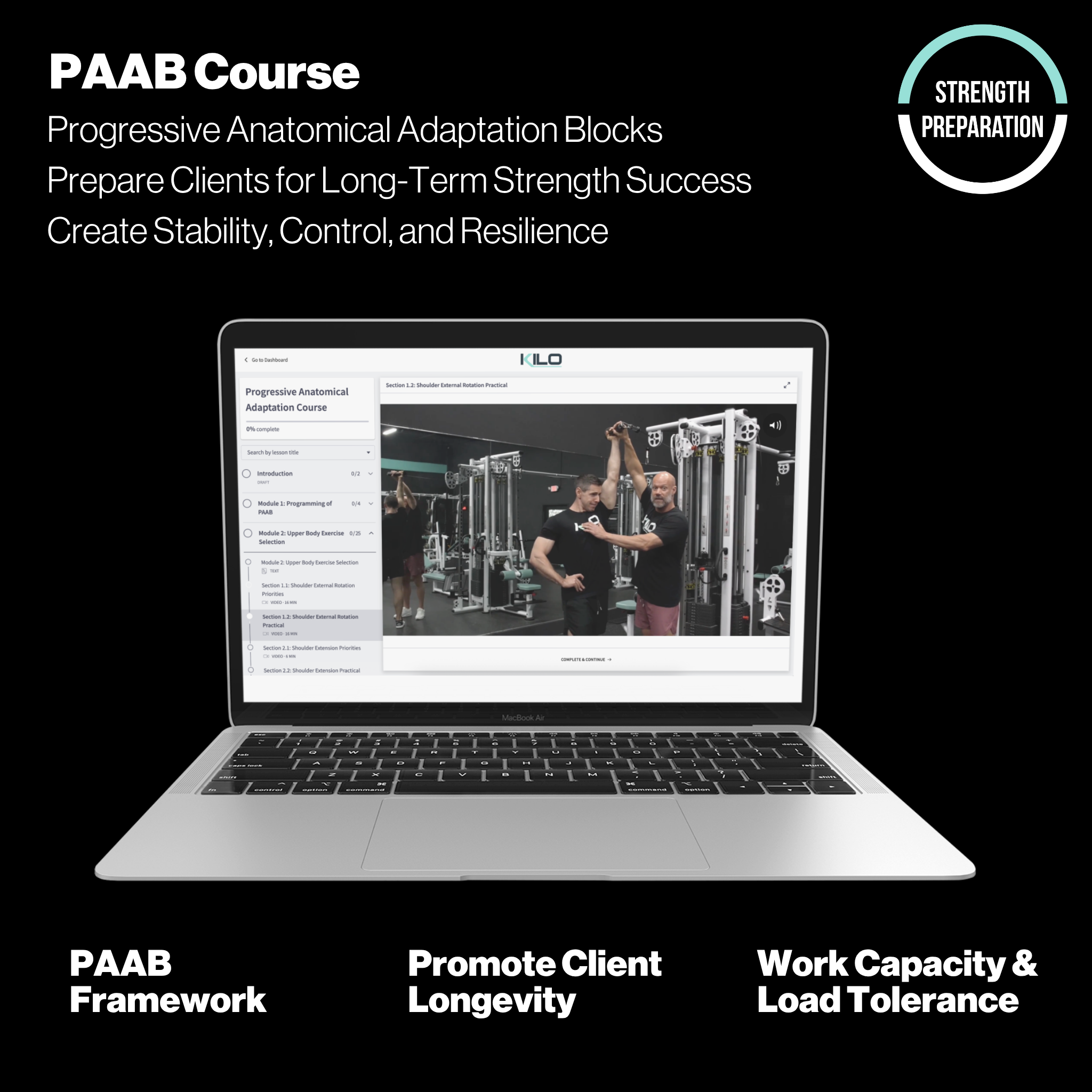
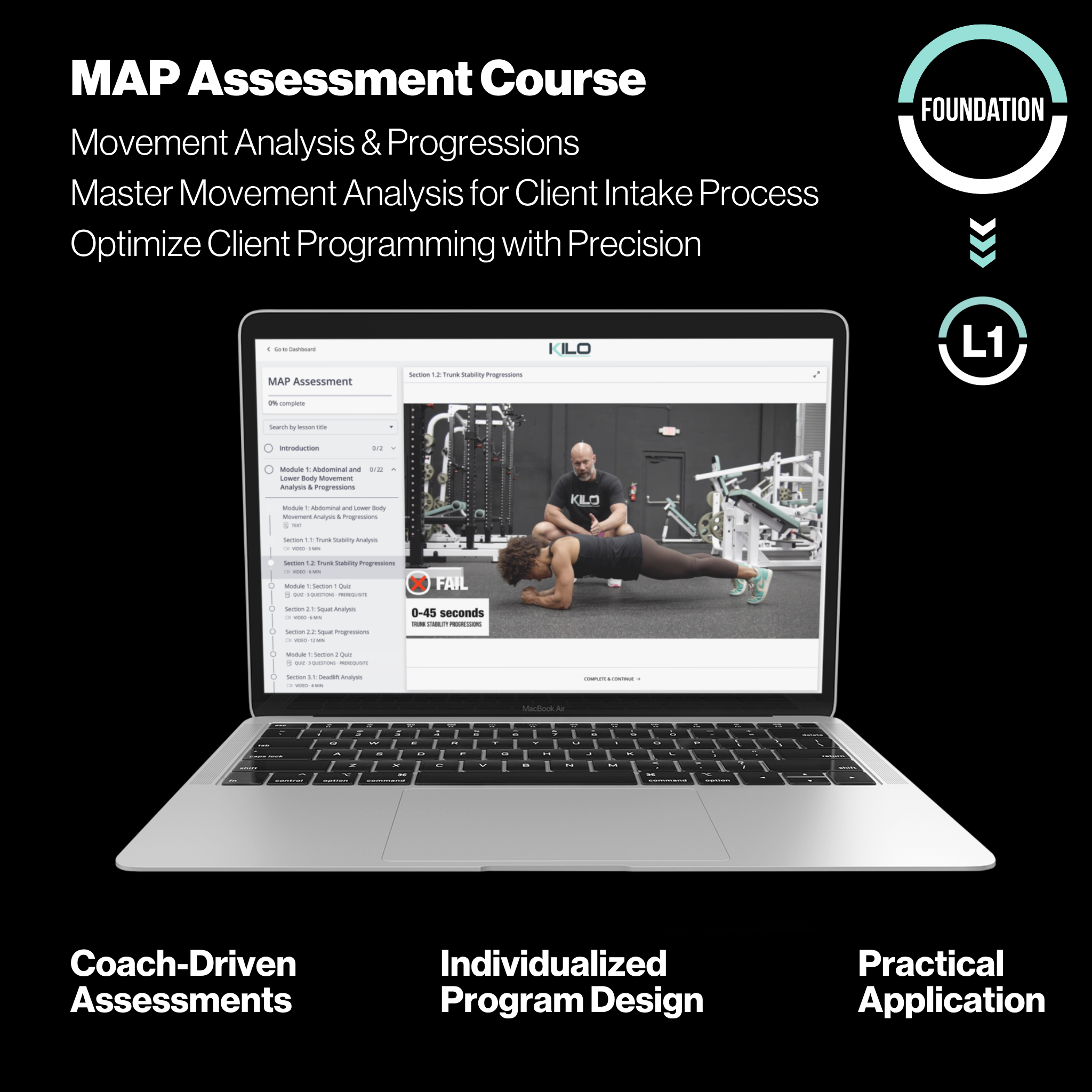
The OSR program is part of the Advanced Strength Specialty and should be layered into a broader developmental framework after the Foundation Specialty is mastered. Here’s how we recommend progressing through the KILO education curriculum to fully understand the implementation of the OSR strategies:
-
Step 1: Movement Analysis and Progressions Assessment (MAP)
-
Step 2: Program Design
-
Step 3: Periodization
-
Step 4: Optimizing Strength Ratios (OSR)
Spend at least one year mastering program design and periodization. Understand how to organize training weeks, manipulate variables, and manage fatigue effectively. Only then should OSR be added to further individualize progress.
Jumping into OSR too soon often leads to confusion and poor application. Without a solid grasp of foundational design, strength ratios can be misunderstood or misused.
Take your time. Get the basics right. Then optimize.
Practical Takeaways: How to Run OSR in Three Days
Follow these key principles to make the three-day OSR structure work:
-
Keep the Original Four-Day Layout: Don’t alter session content.
-
Float Session 4: Carry it into the next week’s training cycle.
-
Use a Rolling Sequence: Think in terms of sessions, not calendar weeks.
-
Reset Expectations: Mesocycles will take longer, and that’s okay.
-
Maintain Motor Pattern Exposure: You're still hitting all key movement patterns regularly.
This preserves the integrity and synergy between sessions, especially in how primary and assistance work are designed to build upon each other.
The Optimizing Strength Ratios program works because of its structure, not just its exercises. Each session is carefully placed to elevate a lifter’s limiting factors over time. Altering that structure dilutes its effectiveness.
Floating the fourth session into a three-day training week keeps the system intact:
-
You maintain session integrity
-
You preserve motor pattern exposure
-
You continue progressing in alignment with your goals
Yes, the total macrocycle takes longer. But your results stay on track. And for lifters with packed schedules or longer recovery timelines, that’s a worthwhile exchange.
Train smart. Protect the system. Let OSR do its job.




Share:
From Sponge to Specialist: How Strength Training Changes as You Advance
The Two Pathways to Stimulate Muscle Protein Synthesis