

KILO / DOWNLOADABLE TRAINING PROGRAMS
Built by KILO.
Ready to train.
Expertly designed training programs you can download, follow, and progress independently. Explore our latest 12-week releases and the original KILO training archive.
DOWNLOADABLE PDFONE-TIME PURCHASESELF-DIRECTED TRAINING
KILO / THE TRAINING LIBRARY
 STRENGTH · HYPERTROPHY · POWER · PREPARATION

THE KILO DIFFERENCE
More than a list
of exercises.
Every KILO program is designed around training structure and progression. Follow a defined plan with clear sessions and guidance, rather than guessing what comes next.
A defined training plan
Follow purposeful sessions organized around specific training objectives.
Clear execution guidelines
Know the sets, reps, tempo, and rest required for each training session.
Progress you can track
Record your work and follow the program-specific instructions as training progresses.
1 / CURRENT COLLECTION
Start with a clear plan.
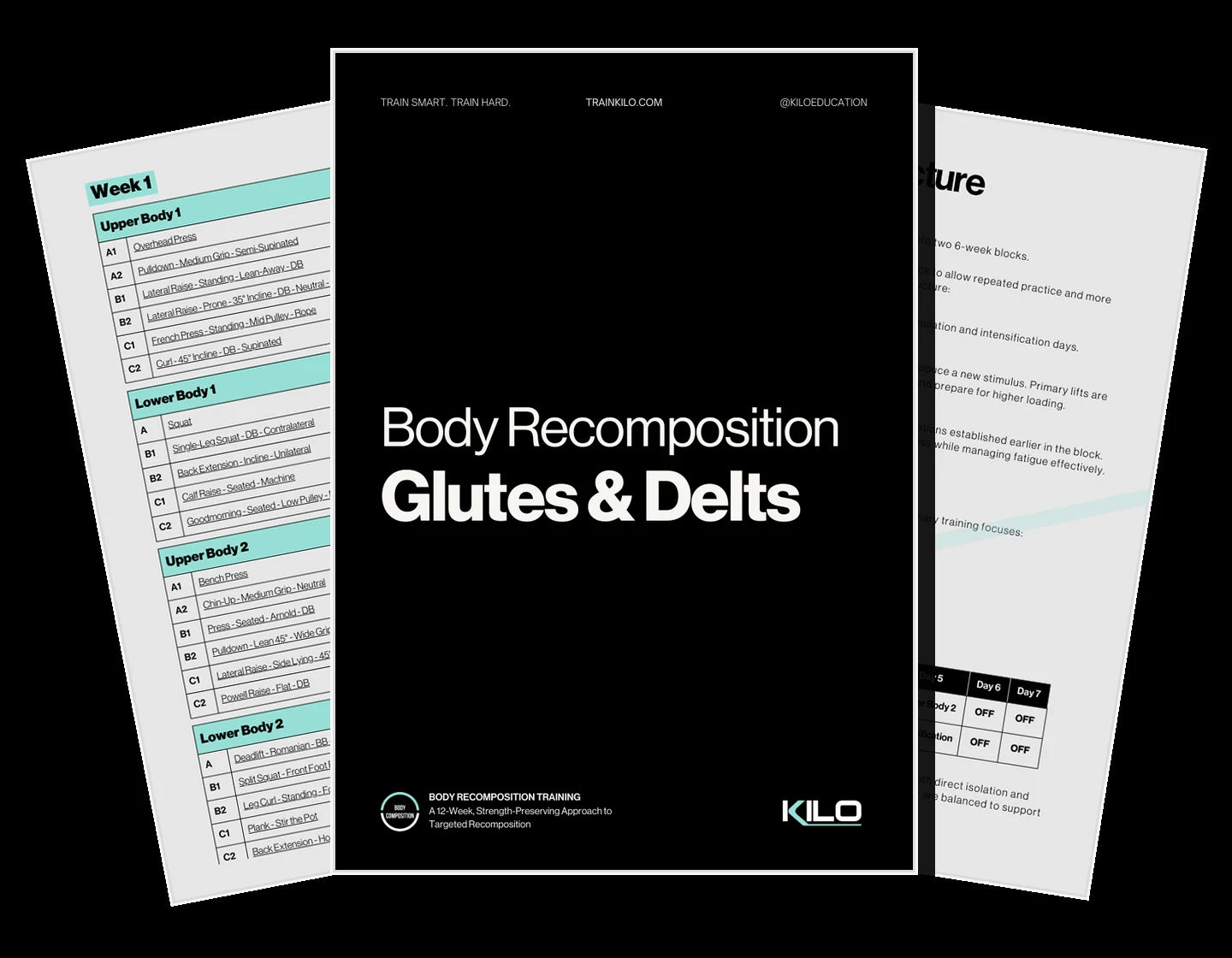
Our newer 12-week training plans combine detailed guidance and structured progression in a single downloadable program.
2 / THE ORIGINAL TRAINING LIBRARY
KILO Classics.
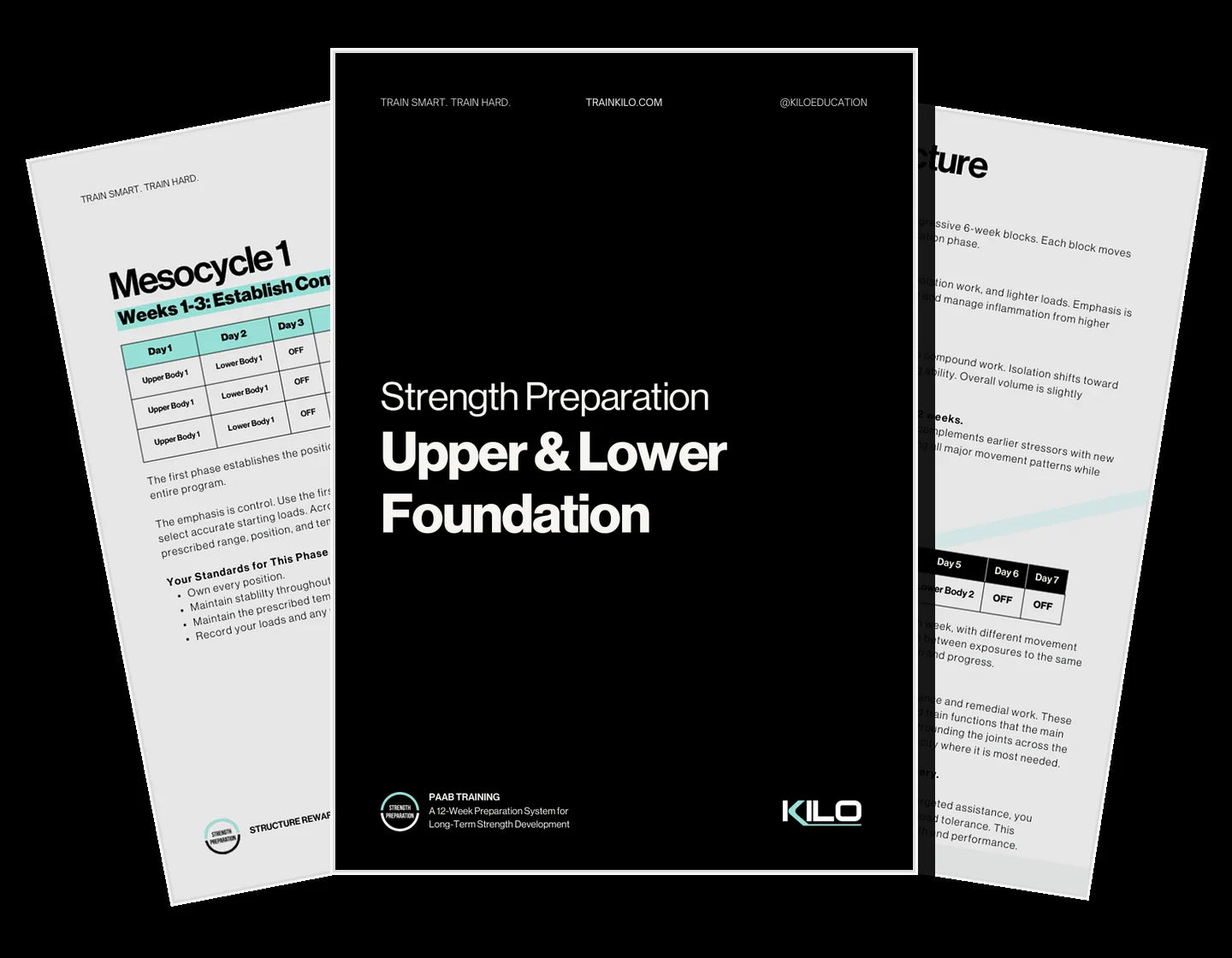
Our original downloadable training macrocycles, organized to make it easier to choose by training objective.

HYPERTROPHY / STRUCTURED PROGRAM
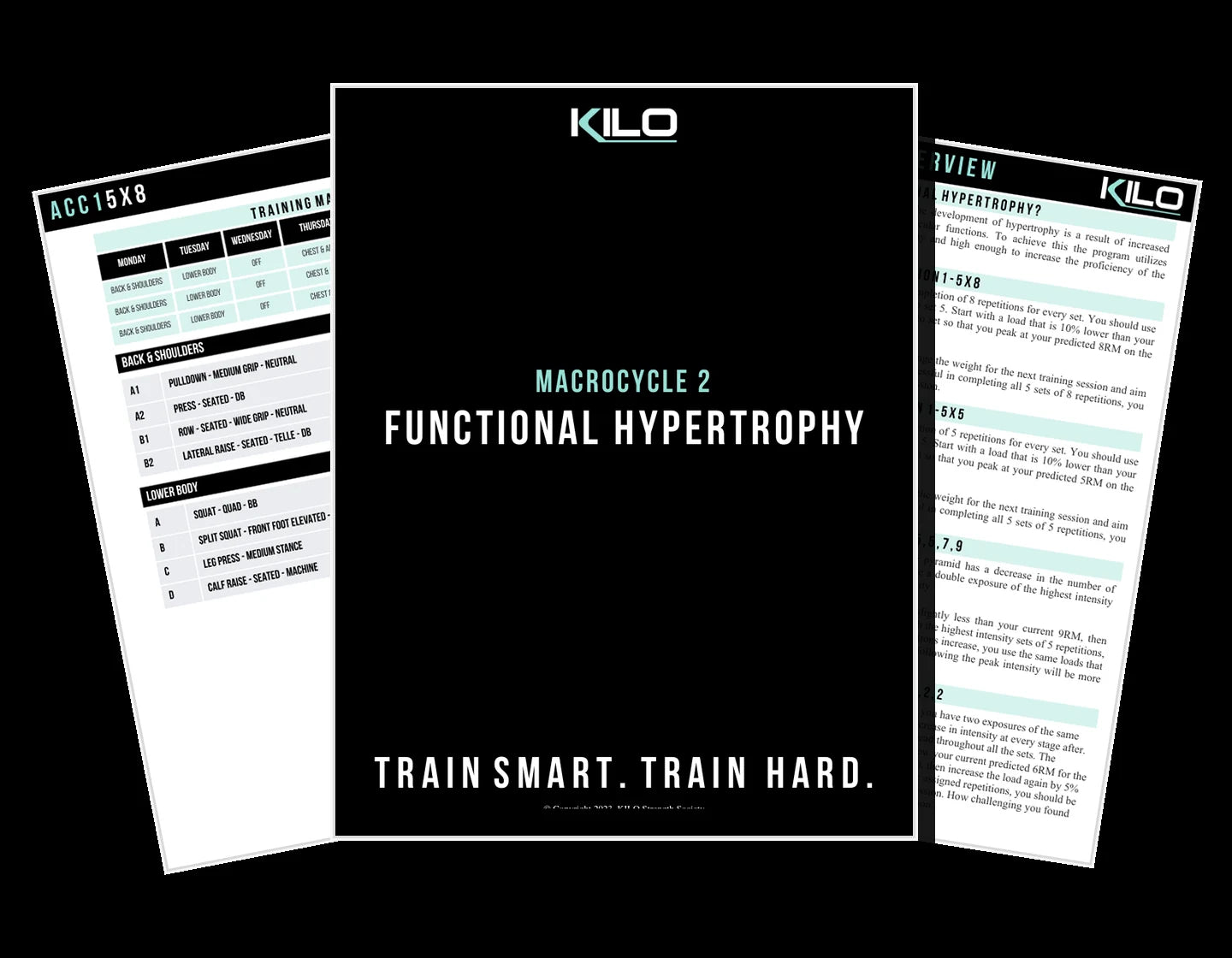
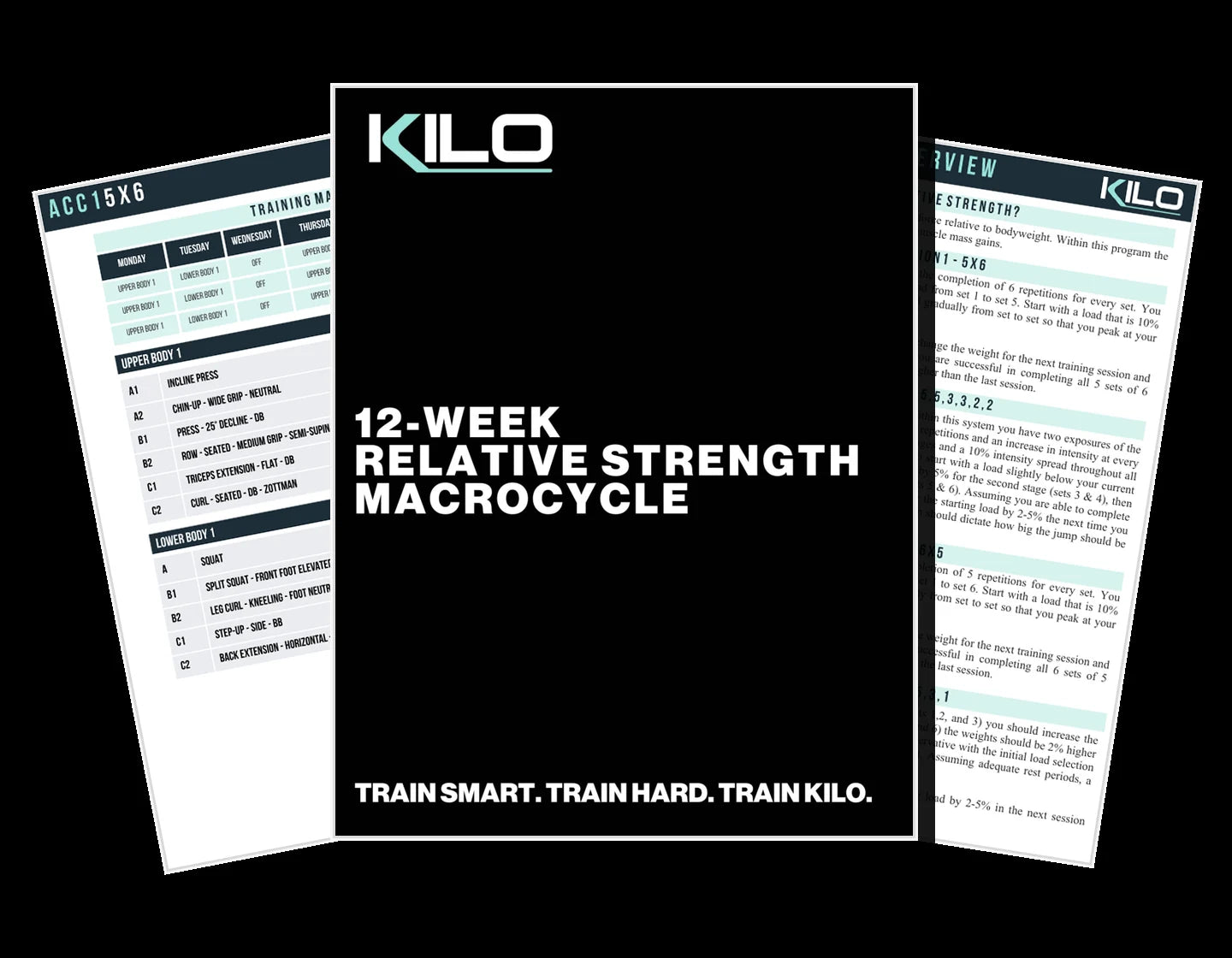
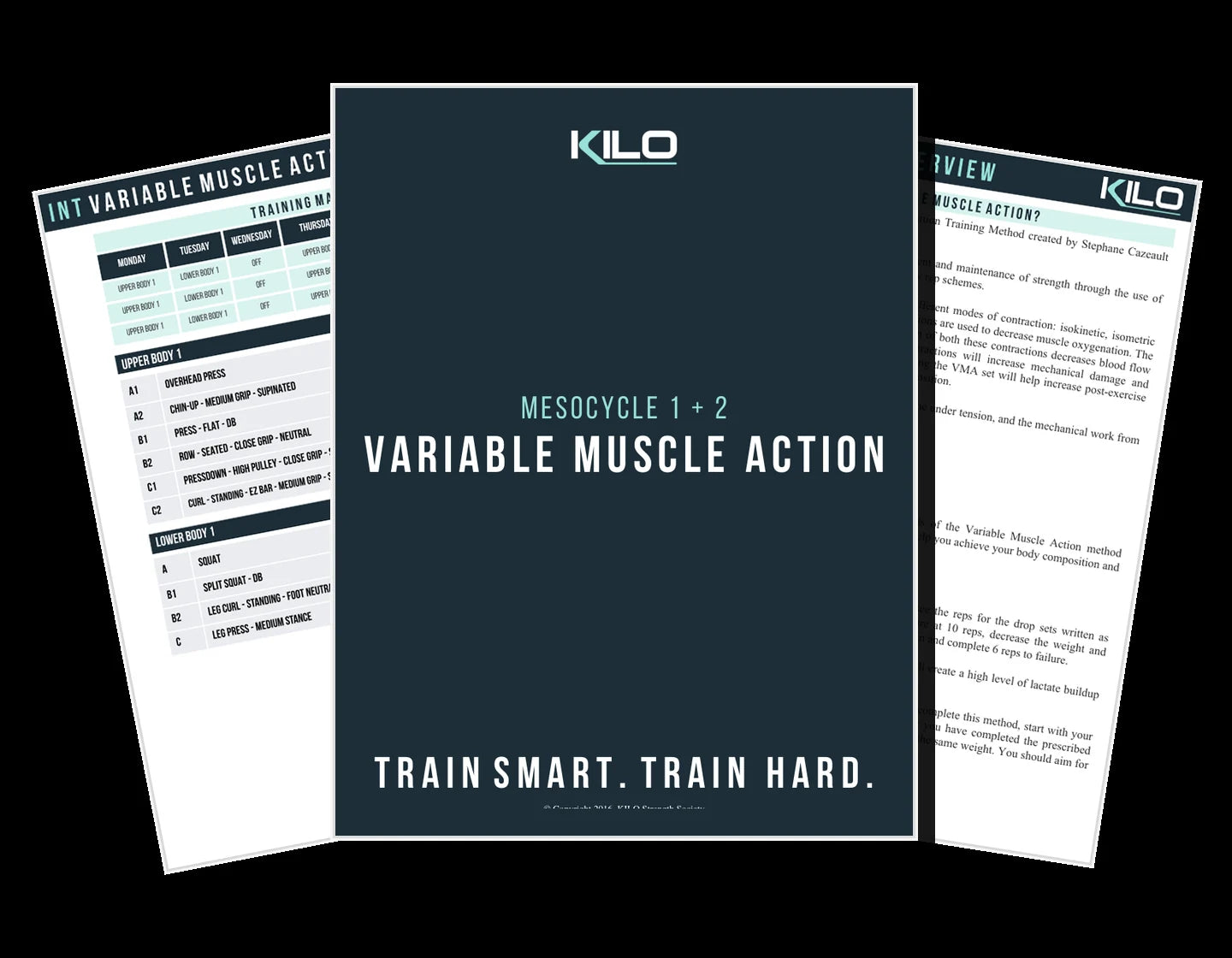
12-Week Functional Hypertrophy Weekly Undulating Periodization Macrocycle
$49.00
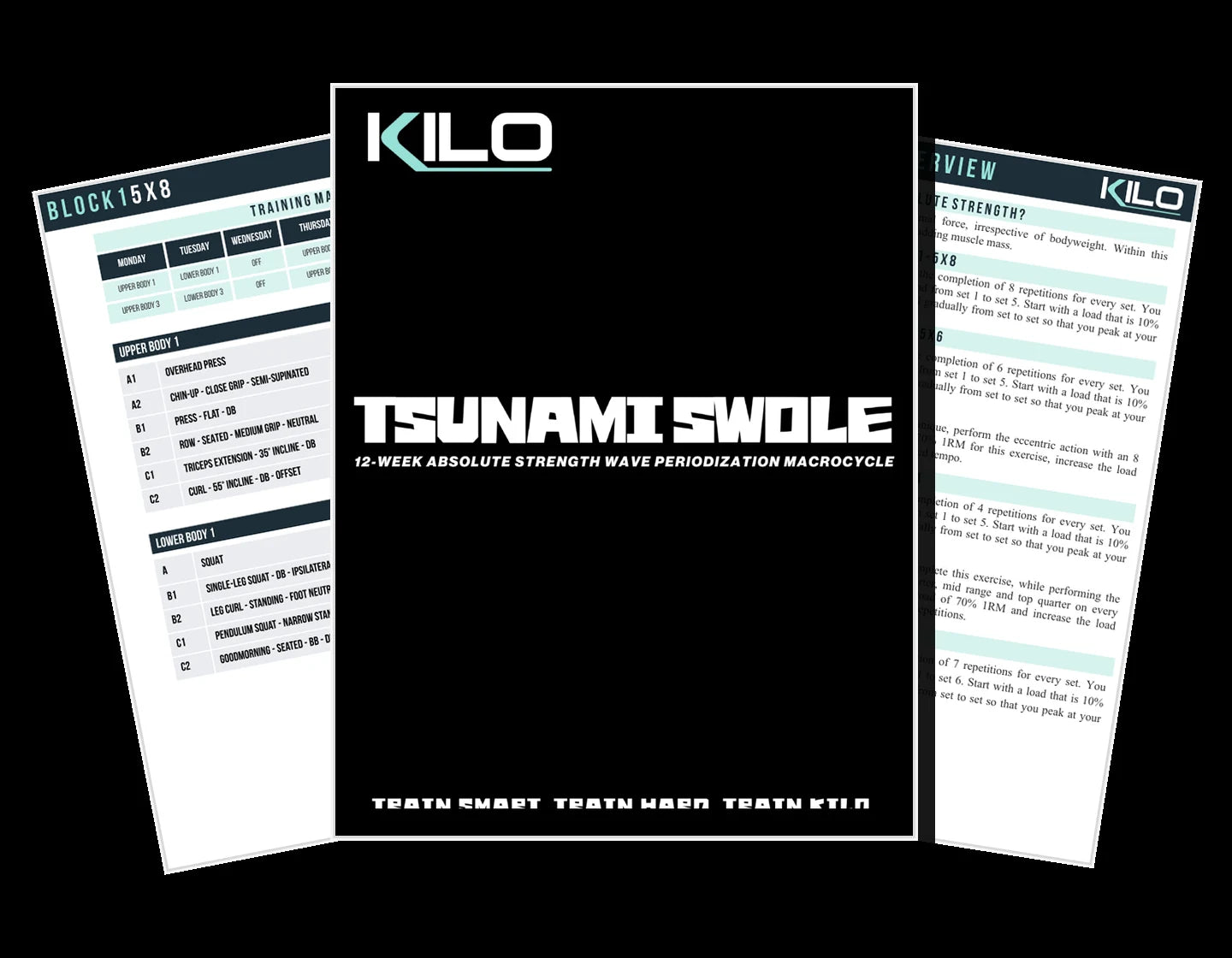
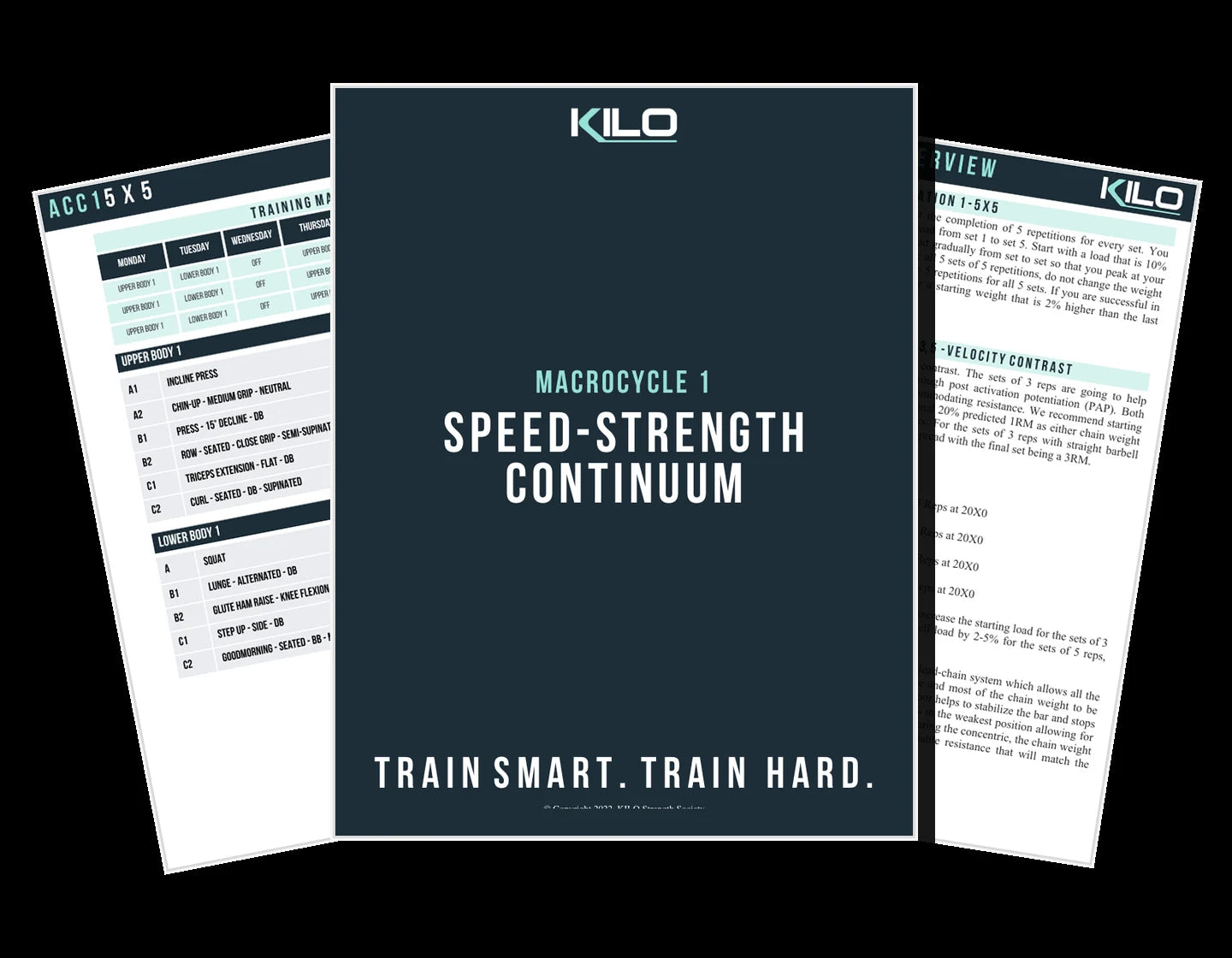
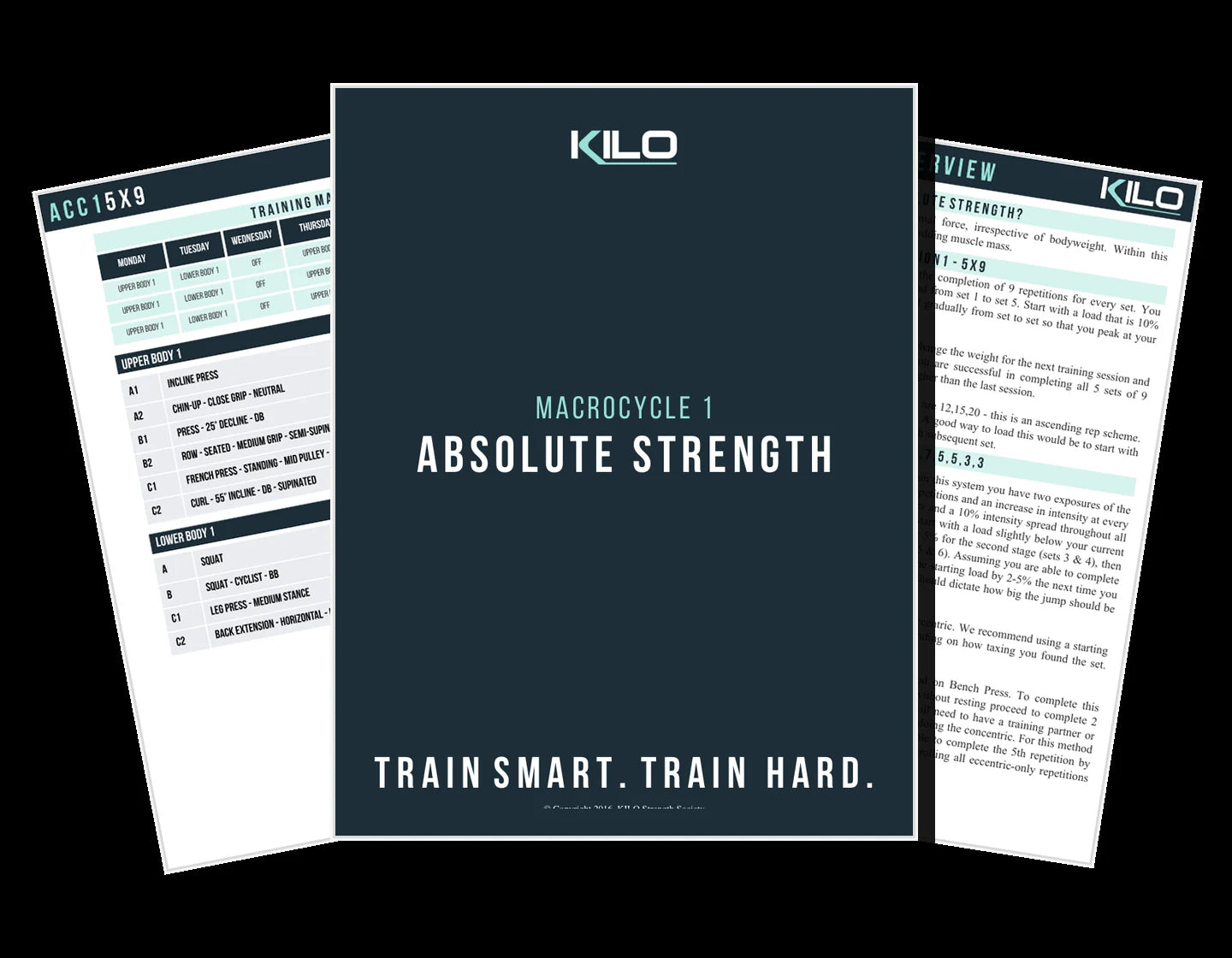
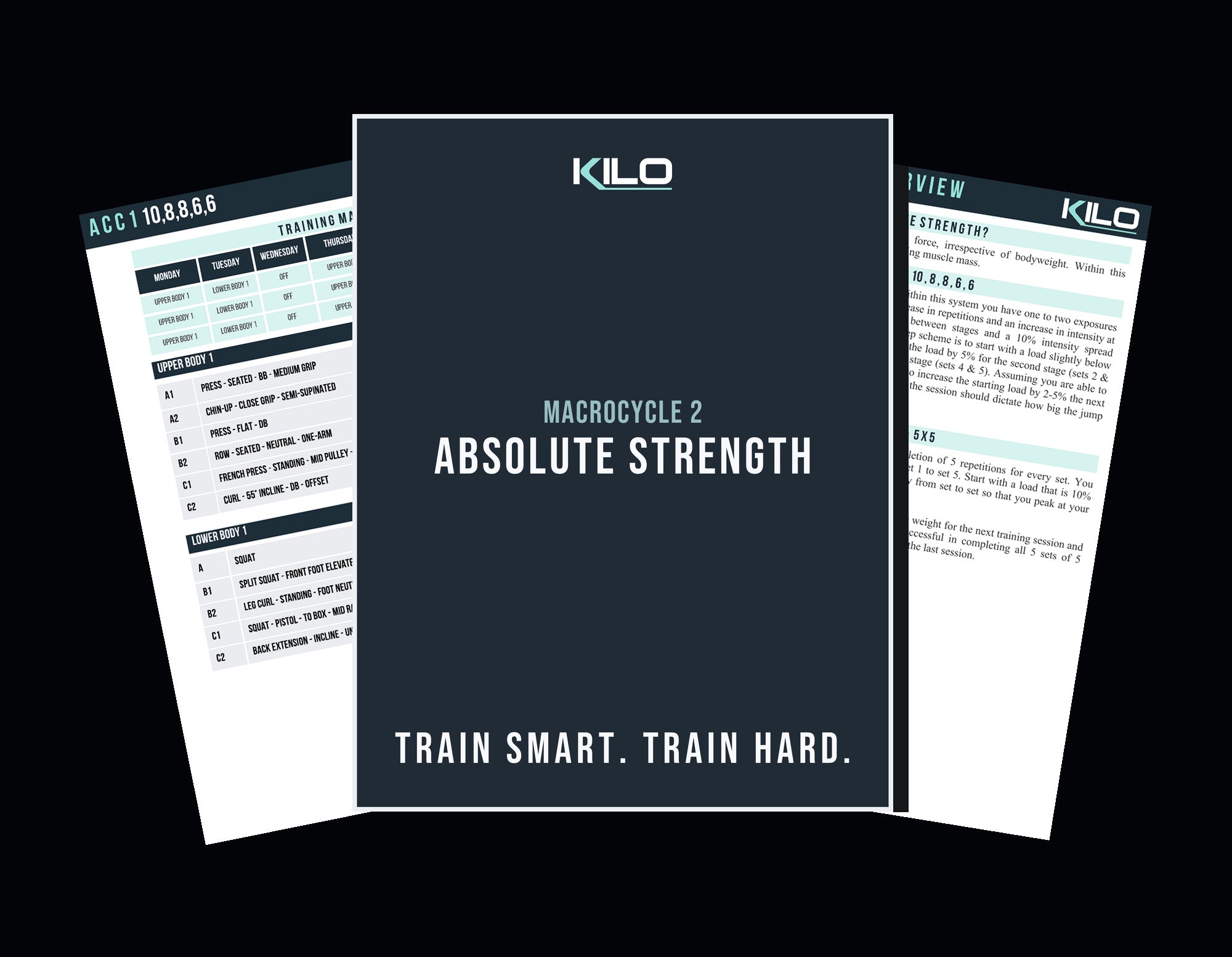

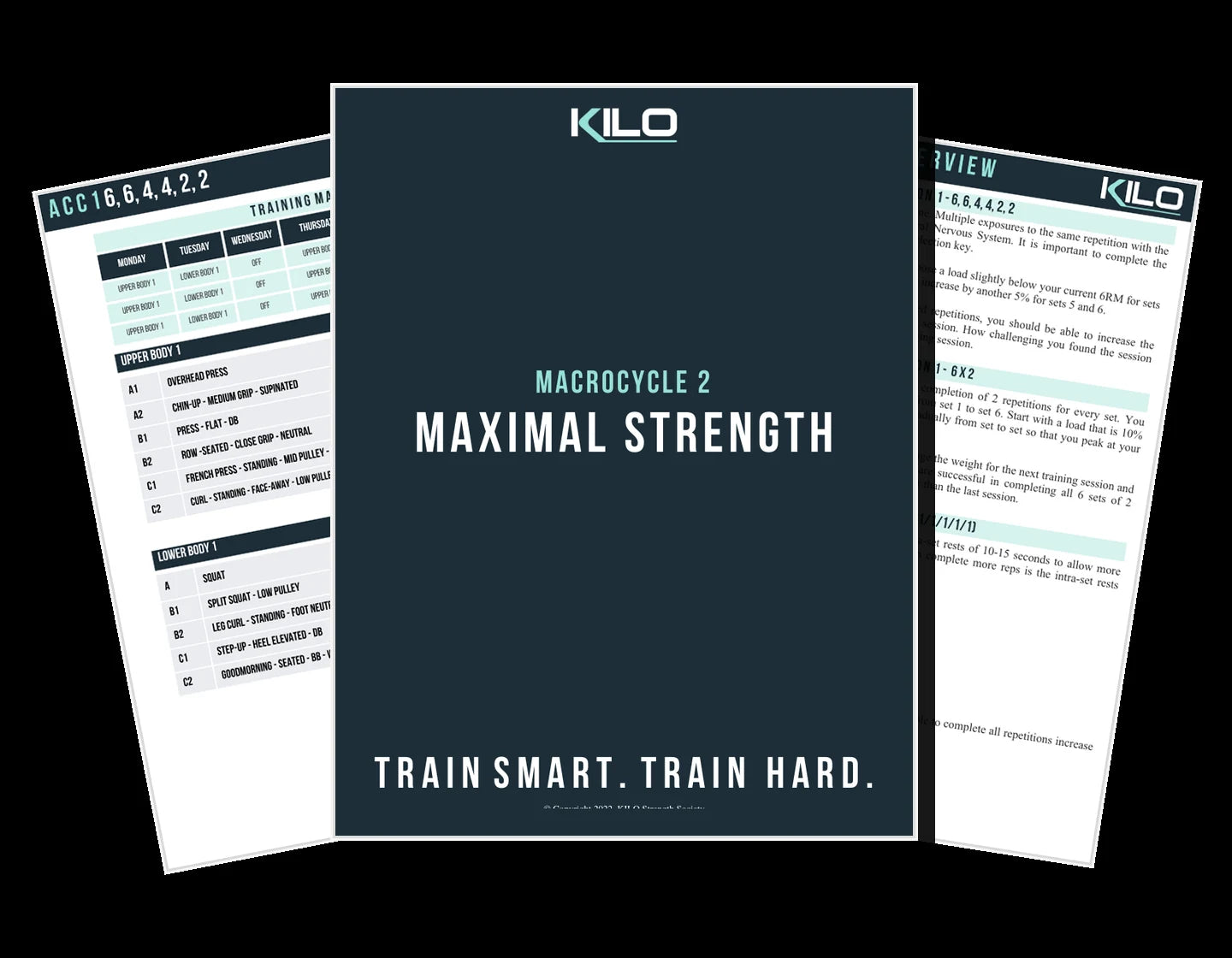
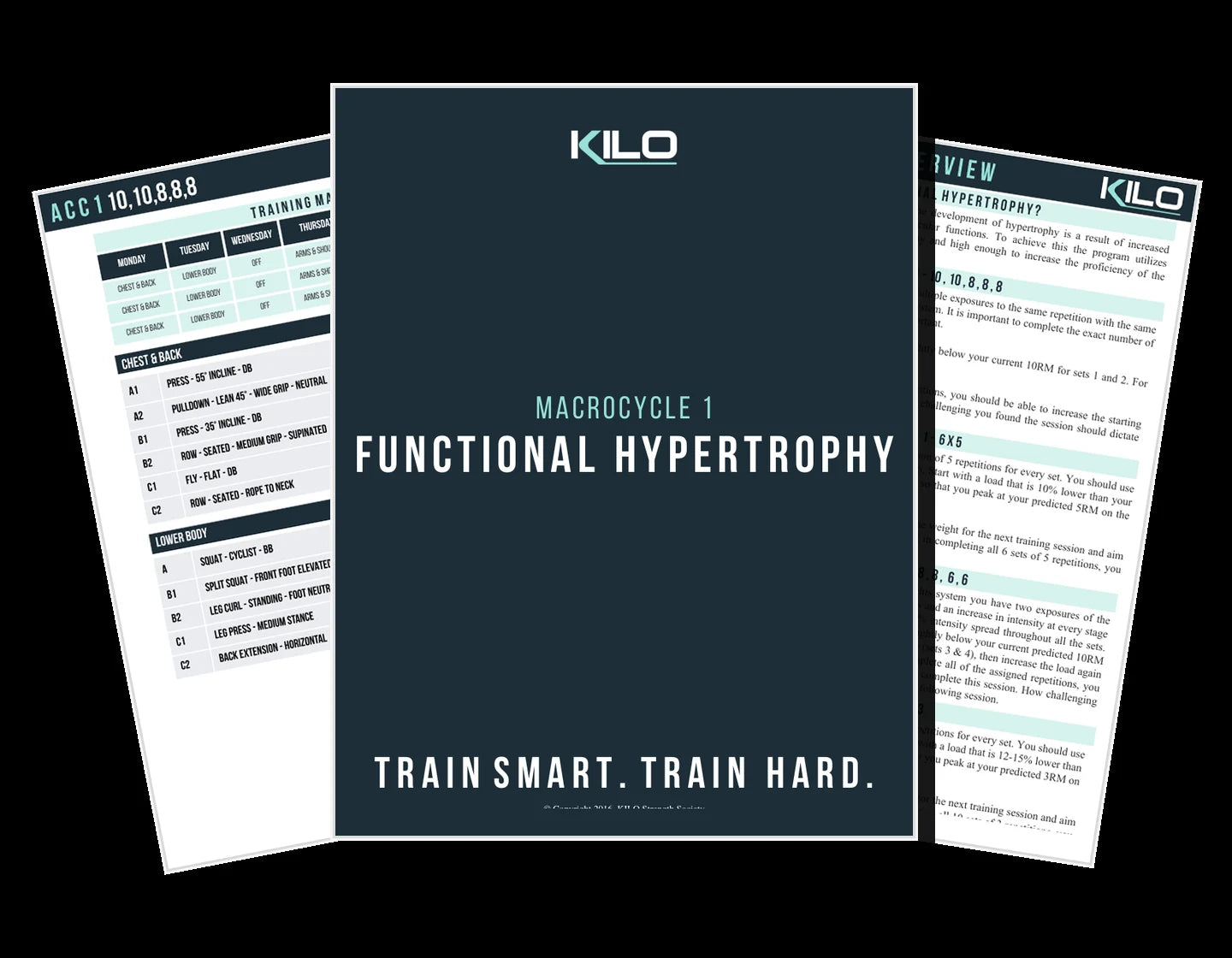
The original archive remains available separately at Archived Training Programs .
3 / PROGRAM GUIDE
How to read your
training program.
Every program includes a structure for performing, recording, and progressing your training. Here's how to use the important parts.
INSIDE A KILO TRAINING PROGRAM Selected pages for illustration; full program supplied after purchase.
 Selected pages for illustration; full program supplied after purchase.
Accumulation vs Intensification
The goal of Accumulation (ACC) Phases is to create training adaptations through volume. Emphasizing volume improves work capacity and provides a stimulus for hypertrophy. To optimize performance, hypertrophy must first be developed to establish a foundation for expressing greater strength.
The goal of Intensification (INT) Phases is to create neuromuscular adaptations through training at higher intensities. In strength training, intensity refers to the amount of weight used relative to your one-repetition maximum (1RM), with your 1RM representing 100% intensity. Emphasizing intensity improves motor unit recruitment, facilitating the development of strength.
Accumulation and Intensification Phases emphasize opposite ends of the Neural-Metabolic Continuum. Accumulation Phases involve lower intensities and higher training volumes, placing greater stress on the metabolic end of the continuum. Intensification Phases involve higher intensities and lower training volumes, placing greater stress on the neural end.
For optimal results, both ends of the continuum must be trained without losing previously developed adaptations. This is why we alternate between Accumulation and Intensification Phases.
Most of our training programs are three weeks long. We have found this to be the optimal duration for emphasizing a specific training stimulus and creating adaptations without detraining the opposite end of the Neural-Metabolic Continuum.
When one end of the continuum is being emphasized, the other is effectively "resting." This approach allows us to train for longer periods without requiring a break while minimizing the risk of excessive fatigue.
Training Matrix
The Training Matrix included with your program outlines the optimal schedule for your training sessions throughout the week.
Each row represents one week, while each column represents a specific day. The matrix identifies which training session you should complete on each day, such as Upper Body 1, Posterior Chain, or Arms & Shoulders.
Each row represents one week, while each column represents a specific day. The matrix identifies which training session you should complete on each day, such as Upper Body 1, Posterior Chain, or Arms & Shoulders.
Exercise Order
The first column of your training program specifies the Exercise Order.
Exercises are organized using a letter and number system, such as A, B, C, or A1, A2, B1, and B2.
Complete all exercises assigned to the A series before moving on to the B series. Once the B series is complete, proceed to the C series, and so on.
When an exercise is assigned a letter without a number, it is performed independently. Complete all prescribed sets and repetitions of that exercise, taking the designated rest period between sets.
When a letter is followed by a number, it indicates that two or more exercises are grouped together and must be completed before moving on to the next series.
Sets, Reps, Tempo & Rest
SETS
The third column of your training program specifies the number of sets to complete.
Sets indicate how many times you must perform the prescribed number of repetitions for an exercise. Each exercise includes a designated rest interval to follow before continuing.
Complete all prescribed sets within an exercise or exercise series before progressing to the next.
REPS
The fourth column of your training program specifies the prescribed repetitions.
A repetition refers to one complete execution of an exercise.
Repetitions may be displayed as a single number or as a sequence of numbers, such as 12 or 5,5,5,3,3,3.
When repetitions are presented as a sequence, each number represents the repetitions prescribed for an individual set.
TEMPO
The fifth column of your training program specifies the tempo for each exercise.
Tempo refers to the speed at which each repetition is performed. It is expressed using a four-digit system, with each digit representing a specific portion of the movement.
First Digit: Eccentric Muscle Action
The first digit represents the duration of the eccentric muscle action, which occurs when the muscles involved in an exercise lengthen.
Examples include lowering yourself into a squat or lowering your body during a chin-up.
The eccentric action is not necessarily the first movement performed in an exercise. Exercises such as deadlifts, chin-ups, and rows begin with a concentric muscle action.
Second Digit: Pause in the Stretched Position
The second digit represents the duration of the pause in the stretched position, following the eccentric action and before the concentric action.
Examples include pausing at the bottom of a squat or holding the bar at your chest during a bench press.
Third Digit: Concentric Muscle Action
The third digit represents the duration of the concentric muscle action, which occurs when the agonist muscle shortens to overcome resistance.
This digit may be expressed as a number, indicating the number of seconds required to lift the weight, or as an X, representing Intended Maximal Concentric Acceleration (IMCA).
IMCA means attempting to accelerate the concentric portion of the repetition as quickly as possible, regardless of the barbell's actual movement velocity.
Fourth Digit: Pause in the Contracted Position
The fourth digit represents the duration of the pause in the contracted position, following the concentric action and before the eccentric action.
Examples include pausing at the top of a chin-up or in the locked-out position of a squat.
Applying Tempo to an Exercise
The following examples demonstrate how to apply the four-digit tempo system based on the starting position of each exercise.
SQUAT - 4210 TEMPO
The squat begins with the agonist muscles in a shortened position. Therefore, the first muscle action is eccentric.
4 seconds: Lower yourself into the bottom position of the squat (eccentric).
2 seconds: Pause at the bottom of the squat.
1 second: Overcome the resistance and return to the standing position (concentric).
0 seconds: Begin the next repetition without pausing.
CHIN-UP - 3112 TEMPO
The chin-up begins with the agonist muscles in a lengthened position. Therefore, the first muscle action is concentric.
1 second: Pull yourself upward (concentric).
2 seconds: Pause with your chin above the bar.
3 seconds: Lower yourself into a full hanging position (eccentric).
1 second: Pause in the hanging position before beginning the next repetition.
REST
The final column of your training program specifies the prescribed rest interval between exercises.
Rest intervals are expressed in seconds.
After completing the designated number of repetitions for an exercise, rest for the prescribed duration before proceeding to the next exercise or set, as indicated by the program.
For exercises you have not performed before, review demonstrations in the KILO Exercise Library or consult a qualified coach.
NEED A PROGRAM WRITTEN FOR YOU?
Different needs.
A personalized plan.
MORE FROM KILO
Build on your training.
Explore education and coaching options related to your training.